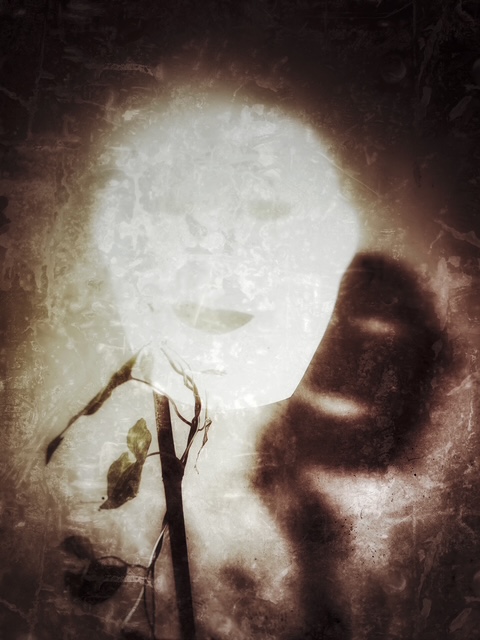
 Behind every polished social performance is an unseen cost. This article by psychotherapist, coach and counsellor Duncan E. Stafford explores masking – the hidden labour of suppressing, adapting and performing aspects of identity, particularly among neurodivergent individuals. It examines how constant self-monitoring can protect against exclusion while contributing to exhaustion, burnout and a diminished sense of self.
Almost everyone knows the feeling of performing a version of themselves. The competent employee. The easy-going uncle. The calm parent. The friend who always says the right thing at the right moment. Neurotypical human beings are fluid social shapeshifters – adjusting constantly to the demands of the room so often that they barely notice when they are doing it.
However, for many people who have ADHD or autism, this isn’t occasional social choreography; it’s relentless work. What looks from the outside like confidence, composure or sociability can in fact be an exhausting, minute-by-minute process of self-surveillance: suppressing instinctive behaviours, analysing conversational cues, rehearsing reactions, monitoring the tone of conversations, eye contact and body language – all while trying to appear effortlessly “typical”. The modern neurodiversity movement has a word for this phenomenon: “masking”.
Interpretations of “masking”
The sociologist Erving Goffman gives us light on much of this in The Presentation of Self in Everyday Life(1959), describing social life through the metaphor of theatre. We are all, he argued, performers on a “front stage”, carefully managing impressions before retreating backstage to drop the act. Other psychotherapeutic thinkers approached the idea differently. Carl Rogers and Carl Jung tended to see the mask as an inauthentic compromise – a barrier obscuring the “real” self beneath. Goffman’s argument was more unsettling: perhaps the self is not hidden behind the performance at all, but constructed through it.
The term “masking” itself later entered psychology through the work of Paul Ekman and Wallace V. Friesen in 1969. They used it narrowly, describing the act of concealing one emotional state behind another socially acceptable expression.
During the opening decades of the twenty-first century however, we began slowly encountering something in clinical practice that felt far larger than the original psychological definition of “masking”. Again and again, beneath anxiety, depression, relationship difficulties and burnout, there appeared the same hidden process: people working tirelessly to conceal aspects of themselves in order to remain acceptable to others. Not a social nicety, but a hidden reservoir of suffering.
By the 2010s, the meaning of the term had expanded dramatically, driven not by textbooks but by neurodivergent people themselves. Online autistic communities, alongside women with ADHD who had slipped unnoticed through traditional diagnostic systems, began describing the hidden labour involved in appearing neurotypical. They spoke of studying conversational rhythms like a second language. Memorising facial expressions. Forcing eye contact that felt physically uncomfortable. Mirroring gestures. Suppressing stimming. Editing every reaction in real time.
Cognitive impact
What stands out in this newer understanding is not that people perform socially – everyone does – but the scale of the cognitive cost. For many neurodivergent people, masking was not occasional adaptation. It is how they get through a workday, a meeting, a conversation without things unravelling. A constant background process consuming attention, draining emotional energy and slowly severing people from their own instincts.
Some described a particularly frightening sensation: no longer knowing where the performance ended and their personality began. After years of adaptation, they could identify the behaviours that kept them safe, successful or accepted, but struggled to recognise what they genuinely liked, believed or wanted for themselves. When you begin to remove the surface of the mask and strip it to its skeleton of parts, you genuinely understand how all-encompassing masking can be.
Eventually, mental health research caught up with what communities had already been describing for years. Studies on autistic “camouflaging” linked prolonged masking to burnout, chronic anxiety, depression, dissociation and delayed diagnosis – especially among women and those whose presentations did not match older stereotypes of autism or ADHD. What often appeared externally as competence was, internally, sustained self-suppression carried out at immense psychological cost.
The paradox
ADHD masking can be especially invisible because it rarely resembles the cartoon stereotype of hyperactivity. More often, it manifests as relentless compensation. Hiding disorganisation behind perfectionism. Concealing impulsivity beneath rehearsed restraint. Covering forgetfulness with obsessive over-preparation. Counteracting attentional instability through sheer unsustainable effort.
From the outside, the person may appear highly functional – even impressive. Inside, they may be surviving on adrenaline, shame and exhaustion. This is the paradox at the heart of masking. The performance succeeds precisely because nobody sees the strain required to maintain it.
And this leaves masking occupying an uncomfortable place in modern society. After all, social adaptation is not inherently pathological. Civilisation itself depends upon restraint, compromise and role-playing. Everybody edits themselves. Everybody performs. But for many neurodivergent people, the demand goes far beyond ordinary social adjustment and into something closer to permanent self-monitoring – a life lived under internal observation. The cruellest part is that successful masking is often rewarded. The better someone becomes at hiding their difficulties, the less likely those difficulties are to be recognised at all.
The mask protects. The mask helps people to survive environments that may not understand them. But over time, it can also become the thing that slowly erases the person who is wearing it. The longer a person spends monitoring themselves, editing themselves and concealing themselves, the harder it can become to recognise who they are beneath the performance. The task is not necessarily to discard the mask entirely. Few people can, and perhaps nobody should. Rather, it is to create spaces where it no longer needs to be worn quite so tightly.
Recognising the mask is often the first step towards loosening it.
References
Ekman, P. and Friesen, W. V. (1969). “The repertoire of nonverbal behavior: Categories, origins, usage, and coding.” Semiotica, 1(1): 49–98.
Goffman, E. (1959). The Presentation of Self in Everyday Life. New York: Doubleday.
________________
Return to THE NOOK
All rights reserved © Copyright Duncan E. Stafford 2026. Unauthorised use and/or duplication of this material without express and written permission from the author of this post is strictly prohibited. Author contact via website Contact page. Website version and image © Copyright Therapy Place Bristol 2026. Article published June 2026