
What happens when a society begins to change faster than its people can adapt? In this essay, psychotherapist Jasna Levinger-Goy, through the metaphors of the jungle and the safari park, explores resilience, anxiety, psychological adaptation and the challenges of navigating a rapidly changing world.
Before I begin, I should offer some biographical details relevant to the observations that follow. I came to the UK in the mid-1990s, fleeing the Bosnian civil war. Until then, I had lived in Yugoslavia (a country that no longer exists). The society I came from was governed by an authoritarian, perhaps even totalitarian, socialist/communist regime. The UK I arrived in was the Britain of the mid-1990s: a Western European democracy of before the financial crisis, COVID-19, and what I now describe as “algorithmic totalitarianism” (see endnote). Looking back, it was in many ways a very different country from the one we live in today.
My reflections therefore draw on my observations of two distinct political systems and three different social environments: pre-1990s Yugoslavia, Britain as it was when I settled there over 30 years ago, and Britain today. They are all viewed through the lens of a psychotherapist, a profession for which I trained in the early 2000s. The observations here are therefore informed by both lived experience and years of clinical practice.
The reflections that follow have been prompted largely by my clients’ comments and reactions to life in contemporary Britain. They focus solely on the psychological and behavioural dimensions of life. They do not extend to the socio-political or economic spheres, which are of immense importance and differ substantially, but lie beyond my area of expertise.
As a keen observer, “blessed” with broad life experience and an eye for recognising patterns and change, I began noticing a number of issues shared by many of my clients. As these issues became increasingly common, they captured my attention. I have organised these “freewheeling” thoughts into what I hope is a coherent and thought-provoking reflection.
Among the issues I have been encountering more and more frequently in my psychotherapy practice are disorientation, anxiety, fear, despondency and even depression. I have also noticed a lack of resilience and a degree of confusion.
(It is worth mentioning here that the media recently started discussing the apparent lack of resilience in society and often advocate artificially fostering it. However, resilience, I fear, cannot simply be created on demand; it develops organically through the conditions of our lives and the challenges we face.)
Reflecting on the issues my clients were bringing to therapy, I began to notice what appeared to be a correlation between different social systems, specifically the Eastern European authoritarian society and Western European democratic society, and the psychological and behavioural patterns that emerge within them. The idea came to me quite suddenly. I found myself thinking of likening the former authoritarian societies of Eastern Europe I have had some experience with to some aspects of the jungle – that is, an environment governed by the “Law of the Jungle”. (Here, the metaphor describes the psychological experience of scarcity and uncertainty rather than implying moral judgement.) Its defining characteristic is the constant struggle for survival and distrust in the jungle (the system) itself: it is seen as a hostile untrustworthy environment. It is an environment in which larger animals prey on smaller ones, while the smaller animals do everything they can to avoid being eaten. Every creature must fend for itself or perish. Life is shaped and constrained by explicit and ever-present hierarchies of power.
The scarcity of resources and brutal living conditions make life in the jungle harsh and demanding. Yet, despite its dangers, the jungle offers animals the freedom to roam, mate, hunt and hide within the natural environment to which they belong. That freedom, however, comes at the cost of a shorter life expectancy. The organisation of the jungle is left to nature. Its order is organic, shaped by instinct rather than regulation. Threat to life is ever-present and comes from all directions – both predictable and unpredictable. Sometimes threat can be rather random. Within such an environment, the individual animal’s effort, initiative and resourcefulness determine, to a considerable extent, not only its chances of survival but also the quality of its existence.
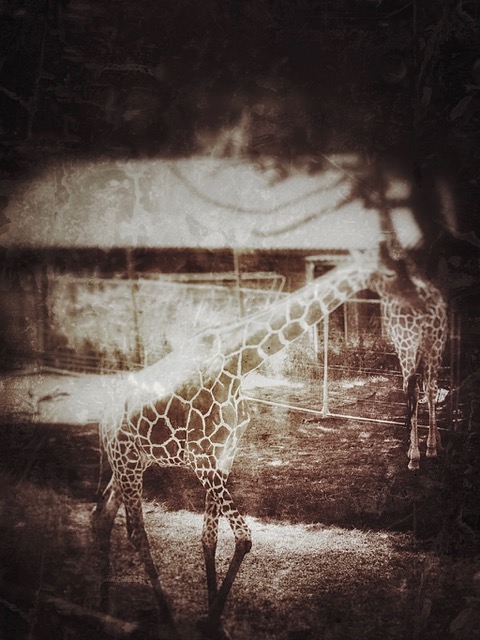
On the other hand, I have likened Western democratic societies of which I also have some experience to some aspects of a safari park. It is a well-structured park (system) which is perceived as a friendly trusting environment. It is an efficient and affluent environment in which the animals are well cared for. They are regularly fed, receive veterinary attention whenever necessary, have enough space for themselves but within defined boundaries. Yet, animals are mostly unaware of the limitations imposed by those boundaries and therefore experience a sense of freedom, albeit a somewhat illusory one.
The safari park is well organised. It operates according to rules, routines and a considerable degree of predictability. The animals’ survival is definitely not under threat. Animals do not merely feel safe, they are safe. Animals themselves do not have many “worries”. They have little need to fend for themselves or to rely on initiative, ingenuity or resourcefulness. Their concerns are no longer those of survival but of comfort and status: securing the largest piece of meat, finding the shadiest place to rest or attracting the most desirable mate.
If I extend the metaphor, the conclusion is that life in Eastern European authoritarian societies, like the one in the jungle, is relatively disorganised, only loosely governed by the rule of law, and characterised by a constant struggle for “survival” or rather bearable living conditions. A strong sense of personal safety and security is largely absent, while unpredictability and randomness are ever-present and unsettling. The perception of threat from multiple directions becomes a normal part of everyday life. Scarcity/poverty further intensifies the need for self-care and self-preservation.
Paradoxically, however, these conditions do not necessarily give rise to disorientation, anxiety, fear, despondency or even depression. Instead, they tend to foster resilience. Individuals become accustomed to relying on their own initiative, ingenuity and resourcefulness in order to cope with adversities. At the same time, they may become less scrupulous and more aggressive, focusing primarily on making life as liveable as possible for themselves and those closest to them.
Because the rule of law is weak, personal security remains precarious and unpredictability becomes the defining feature of everyday existence. Yet people are often psychologically well adapted to these circumstances precisely because this is the only reality they have known. Expectations are shaped accordingly; there is little room for surprise or disappointment. Life is accepted for what it is. As a consequence, the instinct for “survival” is constantly engaged and resilience develops as an organic response to the environment.
Life in Western democratic societies, like life in a safari park, presents the opposite picture. It is generally well organised and governed by the rule of law. The struggle for “survival” is minimal, if it exists at all. Individuals feel protected and secure. There is little threat to their way of life and relatively little uncertainty; for the most part, life is predictable. Affluence and abundance make everyday life more comfortable, creating conditions in which such comforts are not only taken for granted but also assumed to be enduring. Taken together, these conditions foster a society of generally more or less content individuals who are often both willing and able to contribute to the common good. Life is, on the whole, far less of a struggle, which may partly explain the lack of resilience.
Now a word or two about my current clients who brought these issues to my attention. They were born and have spent most of their lives in what I have described as a safari park. Unfortunately, some 15 to 20 years ago, the society in which they have lived began to change – in my view, not for the better – and these changes have inadvertently impacted their lives. As I suggested earlier, the financial crisis, COVID and what I have recently termed “algorithmic totalitarianism” may all have contributed to this shift.
The comfortable and predictable safari park has gradually, without any warning, begun to resemble the jungle. Elements of jungle life have been creeping in, steadily but rather insidiously. The difficulty is that these new circumstances require different psychological resources: different skills, a different outlook and a greater degree of resilience. Such qualities cannot be acquired overnight. Adapting to a significantly altered environment is a slow and demanding process.
It is therefore hardly surprising that many people experience disorientation, anxiety, fear, despondency and depression. These reactions may be understood not simply as individual psychological problems, but as natural responses to a changing social environment. The society people once believed to be permanent is now being challenged, often appearing to change suddenly and without warning (often seemingly for the worse), leaving little opportunity or guidance for adaptation. Learning to navigate this new reality is a difficult process and is likely to require considerable time and effort. It is also likely to take its toll and that is what we are witnessing now. It may even require a generation before people develop the psychological resources needed to feel at home in these altered circumstances. In the meantime, those “caught in the middle” will inevitably face emotional and psychological challenges and confusion, and struggle to adapt.
This is, of course, a broad generalisation based on recurring themes in my work with clients, offered as a possible framework for discussion rather than a definitive explanation.
Endnote for “algorithmic totalitarianism”
I used the term “algorithmic totalitarianism” in an earlier article to draw parallels between the widely recognised characteristics of totalitarianism and the emerging features of a digital world “ruled by algorithms”. Totalitarian societies are typically closed societies that foster prescribed ways of thinking and living. Likewise, algorithmic totalitarianism creates a “closed world”. Both discourage free and critical thinking, favour ready acceptance and conformity over individuality, and leave little room for questioning – although, in both cases, not everyone is equally influenced.
Despite their different methods, totalitarianism and algorithmic totalitarianism appear to produce strikingly similar outcomes. Both narrow the scope of people’s interests, promote unambiguous interpretations and encourage closed minds. Both also foster isolation: totalitarian societies through political and ideological separation, and digitalism through individuals becoming isolated in their own rooms while exposed to increasingly one-sided perspectives. Both encourage groupthink and reinforce divisions between “us” (the good ones) and “them” (the bad ones).
________________
Return to THE NOOK
Click the link if you'd like to visit Jasna’s therapy website
All rights reserved © Copyright Jasna Levinger-Goy 2026. Unauthorised use and/or duplication of this material without express and written permission from the author of this post is strictly prohibited. Author contact via website Contact page. Website version and header image © Copyright Therapy Place Bristol 2026. Article published August 2026