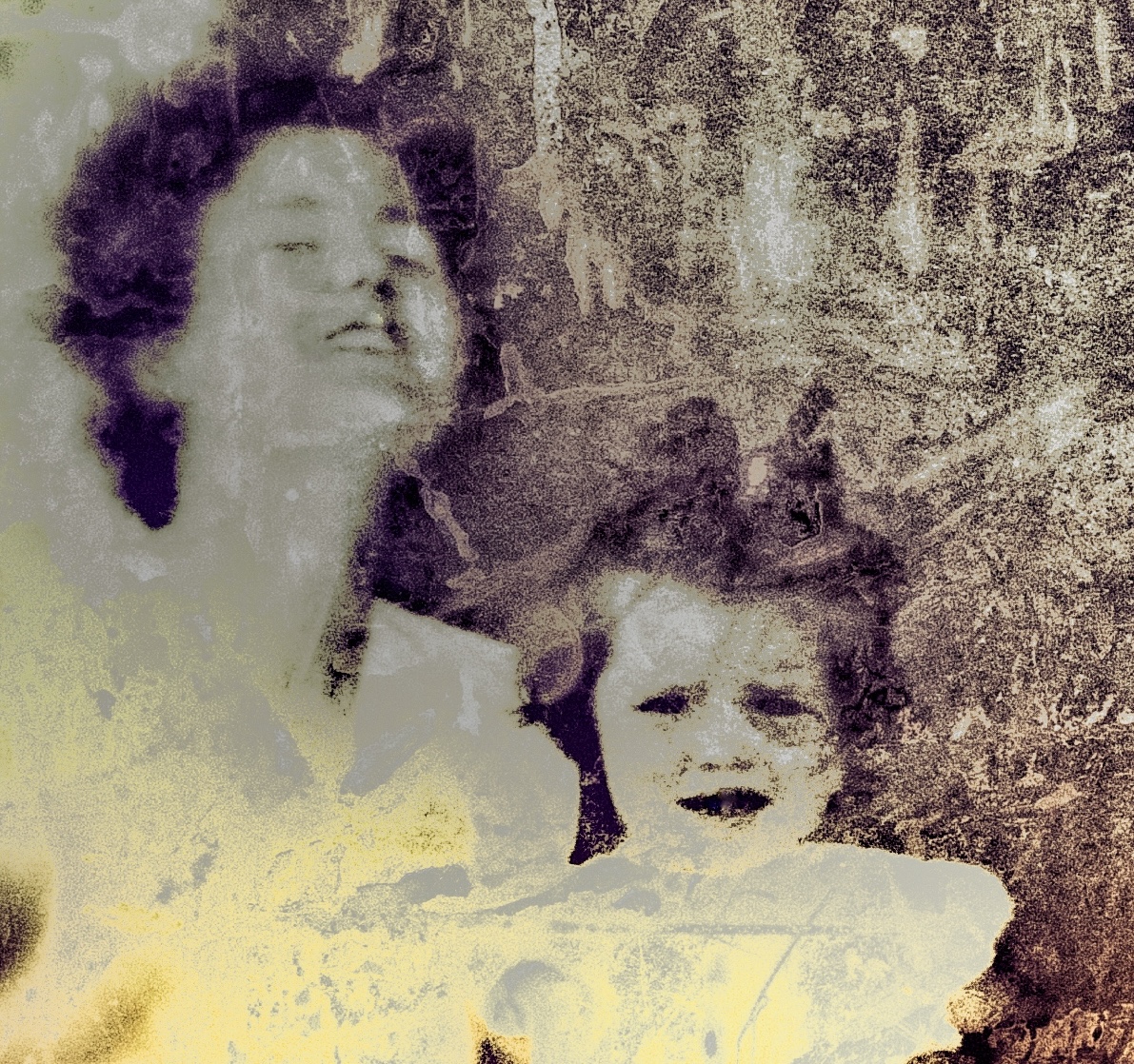
 A chance encounter in a café raises an unsettling question for psychotherapist Duncan E. Stafford: Is this rejection or something more complex? This reflective piece explores how depression can shape a parent’s emotional responses, and how difficult feelings towards a child may sometimes mask deeper experiences of grief, overwhelm or disconnection.
As a therapist I have spent much of my working life attending to what is communicated not only with words but also without: fleeting expressions; a break in tone; the momentary withdrawal of warmth. About a decade ago, in an ordinary café on an ordinary Saturday morning, I found myself witnessing something that has remained with me and, in the moment, it felt like I fully understood what I was seeing. Whether it was my own childhood projection or not, I couldn’t easily look away.
It’s pretty snug in the back of the café on the high street. On most tables, soft fried eggs are being popped by chips and washed down with builders’ strength tea, while unapologetic white bread, spread with margarine, is mopping up baked bean sauce.
Across the aisle, to my right, a table of five sit talking: three young women in their mid-20s, a giant of a man, probably 30, and an angelic child less than two years old in a highchair with her back towards me.
Something doesn’t sit right
I’m not quite sure what first draws my attention to the group but I’m suddenly aware of something completely chilling, something that feels less like irritation and more like rejection.
The woman closest to the child, who appears to be her mother, displays open flashes of anger and disgust towards her for no apparent reason, as the child finger-feeds herself.
Looking across the table, the woman laughs half a beat too late, like someone watching herself perform. Then she turns back to the child and something in her face shifts, tightens, hardens.
I find myself locked onto her expression, so fixed that I’m surprised she hasn’t noticed me watching. I’m unsettled. Here, in the friendly atmosphere of my favourite café, where I have never heard cross words nor seen tension displayed, I am deeply disconcerted by these brief, unguarded moments.
And now I’m no longer enjoying the acidic bite of the tinned tomatoes that accompany my eggs, chips and beans. Something more primitive has taken over: the instinctive reading of faces we are all wired to recognise.
Mother looks blankly at her child. Then, turning back to her friends and partner, she is animated again, smiling, engaging, present. The shift is jarring. Father reaches over and strokes the child’s head. Each time he does so, something in the mother’s face tightens, not enough for the table … but enough.
A moment that’s hard to name
She checks that the others are engaged elsewhere and then, quickly, the hard expression returns: upper lip raised, nose wrinkled, cheeks lifted in unmistakable disgust.
I feel my hand rise to my mouth, as though to contain the words I want to shout across the room. Am I the only one who can see this? I want to stand up and ask the table what is happening, to ask why no one challenges the mother, why no one steps in. Why does no one seem to notice? Or worse, why do they not want to?
I’ve lost my hunger. I am left in a strange, suspended uncertainty. I begin to wonder whether I’m seeing the woman clearly, or whether I’m bringing something of my own childhood into the moment, remembering something I didn’t fully understand.
The child, so calm and contained for one this young, reaches forward for more food. Father strokes her head again, gently, instinctively. Mother leans in, breaks off a crust of toast and drives it past the child’s face to her own mouth, dropping it in. The gesture is small, almost nothing, and yet it carries something sharp. Something excluding. Every movement seems to say: “You are not welcome.”
Not cruelty, but something else
I try to steady myself, to resist the pull to turn her into something monstrous. Something about this feels less like cruelty and more like rupture.
The four adults continue to talk. The child watches, absorbs, waits.
Mother’s eyes dart between her partner and friends, tracking where attention sits. When it settles away from her, the hard expression returns again, quick, concentrated, almost hidden.
I find myself thinking about what happens when love is displaced, when attention shifts, when a child becomes – impossibly – a rival.
Father produces handwipes and passes them to mother. She cleans the child’s hands briskly, then places the used wipe on top of the child’s head. It sits there, absurd, like a small act of humiliation. Father’s arm reaches over and removes it, placing it back on the table without comment. Mother smiles at him then, but it’s thin, brittle, something closer to defiance than warmth. When she turns back to the child, the disgust returns once more, fleeting but precise.
I am watching something raw. Not just anger, but something closer to envy or grief, or even both tangled together.
What we can’t always see
Father stands, lifts the child from her chair and folds her into him. As they turn, I catch her face: bright, open, smiling, a soft burst of laughter. Moments later, mother manoeuvres the empty pushchair through the café. From behind, she looks different, smaller somehow, weighted, as though something has been taken from her rather than given.
The moment passes. The café resumes its gentle rhythm. I sit there, unsettled. What, if anything, could I have done?
Years later, I think less about what I saw and more about what I couldn’t know: how, often, depression and despair wear the face of anger; how easily a child becomes the place it lands; how these moments, quiet and public all at once, pass without interruption. And I wonder, still, whose story I was really witnessing.
This is an adapted article originally written for and published on the “Three men and a blog” therapy blog project in 2019.
_______________
Return to THE NOOK
All rights reserved © Copyright Duncan E. Stafford 2019. Unauthorised use and/or duplication of this material without express and written permission from the authors of this post is strictly prohibited. Author contact via website Contact page.
Website version and image © Copyright Therapy Place Bristol 2026. Article published April 2026