
 As his father approached the end of his life, psychotherapist and counsellor Duncan E. Stafford found himself confronting an uncomfortable question: When does saving a life become preventing a death? From grief and ageing to dignity and autonomy, he reflects on what it means to help someone complete a life.
About eight years after my father’s death, I forgot, for the first time, the anniversary of what had been a momentous event. At first, this unsettled me. Had I become less affected by becoming an adult orphan? Had time finally dulled the edge of loss? Gradually, as even more years have passed I have come to think otherwise.
Grief is a curious companion. In its earliest days it insists upon calendars, anniversaries and rituals. Later, almost imperceptibly, it loosens its grip on dates and settles instead into the pattern of everyday life. We do not forget those who have been close to us; rather, they become woven into our inner world – returning unexpectedly in a phrase, a familiar expression, a piece of music or in the values they quietly instilled. The dead finally cease to inhabit particular days.
It had been a short drive to the nursing home my father had moved to eight days previously. My wife and I had been his primary carers for close to a decade but when, fourteen weeks earlier, he had fallen and broken his hip, his move away from his home and into the healthcare system sparked in him a serious decline. There was also a touch of guilt at the freedoms his move was affording to us.
As we neared the care home, an ambulance on an emergency call passed us. A minute later we drew up behind it and a paramedic vehicle already parked at the home.
My wife said to me, “It’s for your father.”
I winced; I felt her to be right.
As we strode down the corridor of the second-floor suite in which my father had taken residency, a member of staff addressed us.
“Are you here to see Brian?”
“Yes,” we both smiled.
There was already a temporal shift occurring. Odd, I thought, no one has addressed us in such a way before.
A nurse blocked our path to my father’s room.
“You’re Brian’s relatives?”
Somehow, in a moment, we were all in her office.
My wife looked pale.
“You’d better sit down.”
There was tension in the room. With my psychotherapist’s hat on, I found myself attending less to the words than to the emotional field. This experienced nurse seemed caught between what she knew and what she was required to do. Anxiety had become contagious.
After a few hurried words she left us, saying: “I’ll just check on your father’s condition.”
It hit my wife and me at the same moment and we rushed along the corridor behind her.
Bundling into my father’s room we saw a paramedic shouting at the prone and half-naked figure: “Come on Brian … stay with us.”
My father’s chest heaved in physical distress as a bag covered his mouth and another medic prepared to shock him. His skin had the waxy pallor I had seen on my mother as she passed away.
In the small living space that had become my father’s whole world, the paraphernalia of modern emergency medicine was strewn all around.
My wife was first to voice her horror.
“What are you doing this for?”
***
For several weeks, in three separate medical establishments, my father had, despite the communication difficulties caused by a stroke some years earlier, made himself understood. He wanted to die.
For the long years before he broke his hip, my wife and I had cared for him. It had been difficult to watch his almost daily decline. He had been a proud, principled and independent man; a teacher, an artist and, at the age of eighty, finally a published poet. Difficult though it was to witness, we respected that this was a man consciously fading out at his own request.
And yet here we were, thrust into the most terrible of moments: a man who wanted to die being forced back into a world in which he no longer wished to participate.
Our protestations that my father be allowed to pass away brought yet more tension into the room. The shouting stopped, but our fourteen weeks of frustrations with the NHS care system overwhelmed both my wife and me.
In counterpoint, we made our case aloud to the four medics. We spoke of respect, dignity and civilised treatment. But apparently my father’s DNR – his wish not to be resuscitated – had not been recorded in the requisite manner. Procedure and regulation stood in the way of care and welfare, overriding my father’s clearly expressed wishes.
Looking back now, I have never blamed the paramedics. If anything, I felt compassion for them. They were caught between professional judgement and institutional obligation, between humanity and protocol. Institutions necessarily depend on rules, yet dying rarely conforms to them. Compassion cannot always be reduced to a flowchart.
***
In his book Finding Meaning in the Second Half of Life (2005), Jungian analyst James Hollis observed that the great task of the second half of life is no longer acquisition but relinquishment. Much of modern culture encourages us to resist that movement – to remain productive, independent and youthful for as long as possible. Yet there comes a point when wisdom may consist not of resisting life’s natural ending but in participating consciously in it. I think my father had reached that understanding long before the rest of us did.
For his entire adult life, my father voted for a society that respected people and treated them well: a welfare state, a National Health Service free at the point of need – hallmarks, he believed, of a civilised and mature society. Those entrusted with administering his continuing healthcare had previously attempted to erode his rights and his autonomy. Now these paramedics were obliged to pursue procedure when every instinct suggested that care required something different.
My father was being denied his wish to die peacefully and with respect. This was a system seeking to revive him so that it might transport him back to a hospital he had already refused to attend, in order that he could “die” once more – perhaps on a trolley in a crowded A&E corridor.
***
There is a profound difference between saving a life and preventing a death. Medicine is rightly devoted to the first but can sometimes become trapped in the second. Death is not always the enemy. Sometimes it is simply the final chapter of a life already fully lived.
Before all was lost, the senior paramedic took control. Through several conversations involving myself and my father’s GP, permission was finally given for the resuscitation to cease.
Then the room became quiet.
My father was calm once more.
His beloved radio could be heard softly in the corner of the room, and death resumed its natural claim upon his body.
Watching my father die, I found myself thinking less about endings than about completion. Nature does not regard autumn as failure, nor winter as tragedy. They are fulfilments of a cycle. We humans struggle because consciousness allows us to anticipate loss and imagine alternatives. Yet perhaps wisdom consists of recognising that death belongs to life as surely as birth does. My father’s peace lay not in defeating death but in finally no longer having to resist it.
Peacefully, and with us beside him as companions for his final journey, he was able to complete his life with respect and dignity.
I realise now how much of grief had begun long before that afternoon. We often imagine bereavement beginning with death, but in truth it often starts years earlier. Every relinquishment – the loss of strength, the surrender of independence, the move from one’s home, the gradual shrinking of a once expansive life – asks those who love us to mourn in stages. When death finally arrives, we have already said goodbye many times over.
***
Working as a psychotherapist has repeatedly brought me back to one question: What if the developmental task of later life is fundamentally different from that of youth? Early life asks us to acquire – to learn, build careers, perhaps raise families, establish identities. Later life quietly asks something else of us. It asks us to relinquish – our health, our certainty, our independence, our roles and, eventually, life itself. We tend to think resilience means holding on. Increasingly, I wonder whether there is an equally important resilience in learning how to let go.
As therapists we spend much of our working lives helping people learn how to live more fully. Yet psychology has said comparatively little about the final developmental task of dying. We have become remarkably skilled at prolonging life, but much less comfortable discussing completion.
Dignity, I have come to believe, is rarely found in machines, monitors or interventions. It is found in being known. In familiar voices. In the gentle presence of people who see us. In music quietly playing in the corner of the room. Above all, it is found in having our wishes honoured.
When the anniversary slipped quietly past, I thought for a moment that grief had left me behind. Instead, I realised that it had simply changed its shape. My father is no longer tied to a particular day in the calendar. He is present in quieter ways: in my understanding of dignity, in my respect for autonomy, in the values he lived by, and in my conviction that how we help people to die says as much about a society as how we help them to live.
I still return, in memory, to that room – not quite as it was, but as it has come to exist within me. It is after the machines have fallen silent and been removed. An inner space where urgency has gone. The radio, too, is silent. No one is trying to rescue my father from the inevitable end. He is simply a man completing his life in the company of those who knew him best.
In reality, it remains one of the most moving moments I have known. It was also, on its second attempt, one of the most peaceful.
Only then was my father’s death returned to him with the dignity it should never have lost.
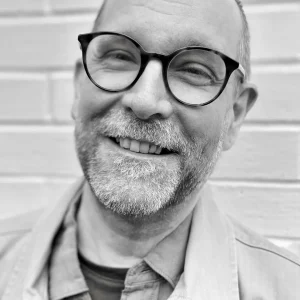
About the author: Duncan E. Stafford has spent his working life following curiosity. Before finding his way into psychotherapy, he was a professional musician, composer and educator – worlds that continue to inform his creative and distinctly human approach. For the past 25 years, he has been a psychotherapist, counsellor, supervisor and writer, exploring relationships, sexuality, neurodivergence and the strange business of being human.
Reference
________________
Return to THE NOOK
All rights reserved © Copyright Duncan E. Stafford 2026. Unauthorised use and/or duplication of this material without express and written permission from the author of this post is strictly prohibited. Author contact via website Contact page.
Website version and image © Copyright Therapy Place Bristol 2026. Article published October 2026.